
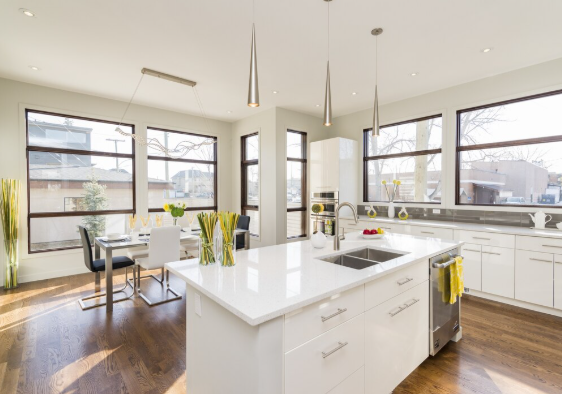
Choosing the right countertop for a high-traffic kitchen can be a daunting task. With so many materials available, two of the most popular options are quartz and granite. Each has its unique characteristics, making it essential to understand their differences to make an informed decision that aligns with your lifestyle and design preferences.
Understanding Quartz and Granite Countertops
Both quartz and granite are renowned for their beauty and durability but differ significantly in their composition and properties.
Material Composition: Natural vs. Engineered
Granite is a natural stone that is cut from large slabs mined from the earth, making each slab unique with its intricate veining and color variations. This natural origin provides a sense of authenticity that many homeowners appreciate.
On the other hand, quartz is an engineered product, composed of about 90-95% natural quartz crystals mixed with resins and pigments. This process results in a non-porous surface that offers consistent patterns and colors, making quartz a favorite for those seeking uniformity in design.
Durability and Performance: Which Material Holds Up Better?
Durability is a critical factor, especially in high-traffic kitchens where wear and tear are inevitable.
| Property | Quartz | Granite |
|---|---|---|
| Scratching | Resistant | Highly resistant |
| Staining | Non-porous, resists stains | Porous, needs sealing |
| Heat Resistance | Moderate, use trivets | Excellent, can place hot items directly |
While both materials are strong, granite’s ability to endure high temperatures makes it a practical choice for avid cooks who may place hot pans directly on the surface. However, granite does require regular sealing to maintain its stain resistance due to its porous nature.
Maintenance Requirements of Quartz vs. Granite
Maintenance is often a significant concern for homeowners, especially in a bustling kitchen environment.
- Quartz: Requires minimal upkeep. A simple wipe-down with warm water and mild soap is usually sufficient. No sealing is necessary.
- Granite: Needs periodic sealing, typically once every year or two, to prevent stains and moisture absorption. Regular cleaning with a pH-neutral cleaner is also recommended.
For those prioritizing convenience and ease of maintenance, quartz presents a clear advantage. Its non-porous surface allows for effortless cleaning and care, making it especially appealing to busy households.
Cost Considerations for Kitchen Renovations
The cost is another critical factor that many homeowners weigh when deciding between quartz and granite countertops.
Granite prices can vary widely based on the rarity and visual complexity of the slab. Exotic granite can be quite expensive, while more common varieties may be more budget-friendly.
Quartz generally has more predictable pricing, varying minimally based on color and pattern. Although certain high-end collections can reach granite prices, there are many affordable options available.
Final Thoughts: Making the Right Choice for Your Kitchen
Ultimately, the decision between quartz and granite should align with your kitchen’s design goals, your cooking habits, and the maintenance level you are willing to maintain. If you favor natural texture and singularity, granite is an excellent choice. Conversely, if you seek consistency and ease of care, quartz may be your best fit.
Whichever option you choose, both materials add significant value and aesthetic charm to your high-traffic kitchen. At every step of your renovation, consider how each surface may affect your daily routine and overall kitchen ambiance.
Ready to explore your options? Consult with experts who understand the nuances between quartz and granite and can help you find the perfect fit for your cooking space. Check out Gallo Rosso Kitchen and Bath Design Inc. for tailored guidance in selecting your countertops.


